The electric BMW 3 Series costs $4,400 less than the M350, and the inline-six has notes
The eighth-generation 3 Series reaches US showrooms in the first quarter of 2027 with two four-cylinder sedans, an inline-six M350 and the first electric 3 Series, which is somehow the bargain of the quick ones.
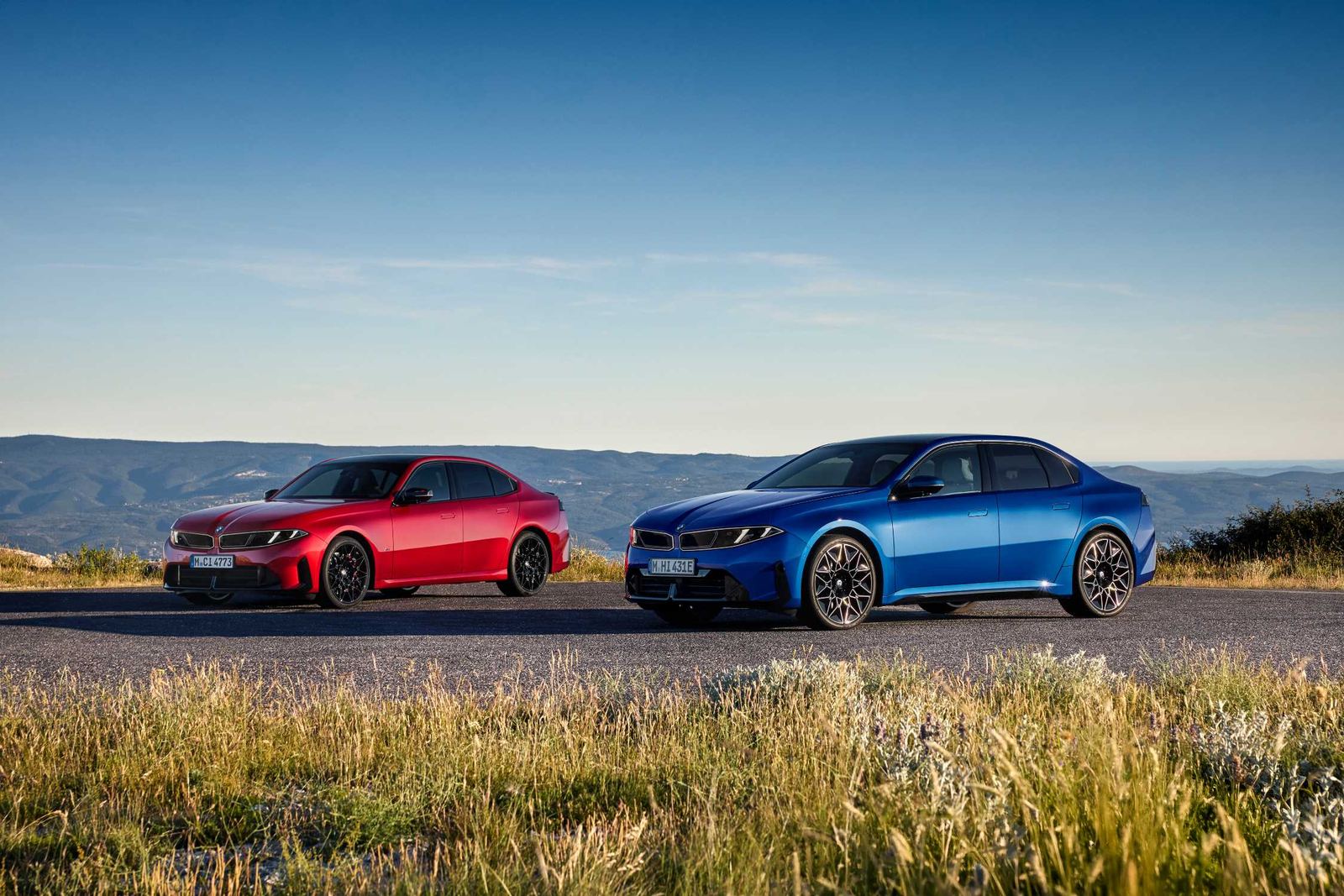
The first electric BMW 3 Series costs $4,400 less than the gas M350, and by BMW’s preliminary estimate it goes up to 468 miles on a charge.
BMW USA has put prices on the eighth-generation 3 Series, which brings the car into what BMW calls its Neue Klasse era. Four models arrive in US showrooms in the first quarter of 2027, and each one adds $1,350 for destination and handling.
| Model | Powertrain | Base MSRP |
|---|---|---|
| 330 | 2.0-liter four, 48V mild hybrid | $49,900 |
| 330 xDrive | 2.0-liter four, 48V mild hybrid, all-wheel drive | $51,900 |
| i3 50 xDrive | Two electric motors, all-wheel drive | $61,500 |
| M350 xDrive | 3.0-liter inline-six, 48V mild hybrid, all-wheel drive | $65,900 |
The $4,400 gap is simple arithmetic on those MSRPs: $65,900 for the M350 xDrive minus $61,500 for the i3 50 xDrive. Both pay the same destination fee, so it cancels out, which is the most useful thing a destination fee has ever done.
i3 50 xDrive: two different kinds of motor
The i3 50 xDrive puts an electric motor on each axle for a combined 463 hp and 476 lb-ft. BMW quotes 0 to 60 mph in 4.5 seconds.
The two motors are not the same design. The rear motor, on the primary drive axle, is an electrically excited synchronous motor rated at 322 hp and 321 lb-ft. Instead of permanent magnets, its rotor carries electromagnets, so the control system can weaken the rotor field at light loads to cut losses and strengthen it when the driver asks for torque.
The front motor is an asynchronous, or induction, motor rated at 165 hp and 188 lb-ft. Its rotor is a set of aluminum bars joined by short-circuit rings, and it makes torque from the slip between the rotor and the stator’s rotating field. BMW says it uses only iron and aluminum. Against its previous-generation electric drive, BMW claims the pairing cuts energy losses by 40 percent, cost by 20 percent and weight by 10 percent.
So the i3 gets one motor with a dimmer switch for its magnetism and one that gets by on iron, aluminum and slip. A specialist and a utility player, sharing one car.
The battery and charging
The pack uses new cylindrical cells, 46 millimeters across and 95 millimeters tall, which BMW says hold 20 percent more energy by volume than the prismatic cells in its previous generation. The cells go straight into the pack with no modules, and the pack’s housing doubles as the car’s floor. So any fries you drop down there are, technically, sitting on the battery.
The car runs an 800-volt system and DC fast charges at up to 400 kW. BMW estimates that 10 minutes on a fast charger adds 191 to 208 miles. AC charging runs at up to 15.4 kW.
BMW’s range estimate is 446 to 468 miles. That figure comes from preliminary BMW testing using EPA procedures; official EPA figures are not out yet. Until they are, 468 is BMW’s number, and we are treating it like a manufacturer’s estimate, because it is one.
M350 xDrive: the inline-six stays
The gas flagship keeps a 3.0-liter inline-six, now with 48V mild-hybrid assistance. Output is 437 hp and 428 lb-ft, up from 386 hp in the model it replaces. The electric motor sits in the transmission housing as a starter-generator and adds up to 17 hp.
An eight-speed Steptronic Sport transmission and xDrive all-wheel drive are standard. BMW claims 0 to 60 mph in 3.9 seconds and an electronically limited 155 mph top speed with sport tires. A rear-drive mode BMW calls Drift Moment arrives during 2027 by software update, including for cars already delivered. It is the rare over-the-air update that tire shops will be glad to hear about.
330 and 330 xDrive: the four-cylinder cars
The 330 models use a 2.0-liter inline-four with a belt-driven 48V starter-generator, rated at 255 hp and 295 lb-ft through an eight-speed Steptronic automatic. BMW quotes 0 to 60 mph in 5.9 seconds.
Both gas engines run the Miller cycle, shortening the intake-valve opening time to improve efficiency. They also pair Valvetronic variable intake-valve lift with switchable exhaust valves. BMW says that cuts the engine’s drag torque by about 66 percent, so the mild-hybrid system can recover more energy when the car slows down. Translation: the engine fights less when you lift off, and the battery gets more of the free lunch.
Where they are built
The 3 Series started at BMW’s Munich plant in 1975. The i3 is built there now; series production began in August 2026. The gas 3 Series moves to BMW’s Dingolfing plant, starting in November 2026. Fifty-one years after Munich built the first one, the 3 Series now has a separate address for each kind of fuel.