CSX 2000: the first Shelby Cobra
Before the Cobra was a poster car, it was one prototype: CSX 2000.
Re-checked Oct 6, 2026 against the Shelby American Collection's CSX2000 page and the Commons file description.
Before the Cobra was a poster car, it was one prototype: CSX 2000.
One car, one chassis number
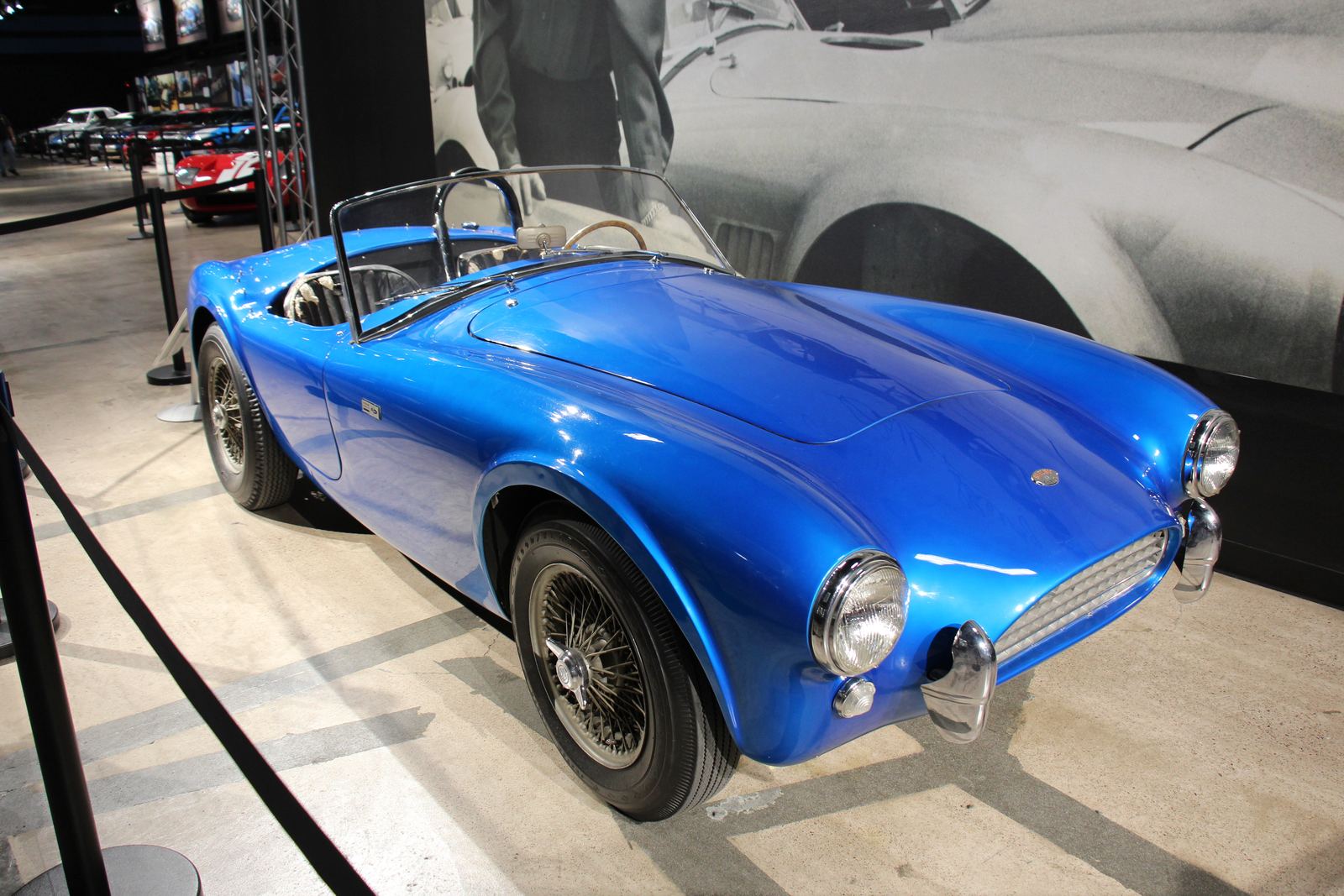
CSX2000 was the chassis number given to the one and only prototype Cobra. That is how the Shelby American Collection in Boulder, Colorado, puts it, and the car is on display there on loan from the Miller Family Automobile Foundation. AC Cars labeled it “Carroll Shelby Experimental 2000.” Every Cobra story starts with this car, because for a while it was the only Cobra there was.
The British half
AC Cars built it at Thames Ditton, England, by modifying an AC Ace with direct input from Carroll Shelby. In plain English, the Ace was a small, light British roadster, and Shelby wanted to make it a lot faster without making it a lot heavier.
So the prototype got stronger parts than any Ace. It had a Salisbury limited-slip rear end, which means the differential sends power to both rear wheels instead of letting one spin uselessly. It had inboard rear disc brakes, mounted next to the differential instead of out at the wheels, reinforced suspension and thicker-walled main chassis tubes. AC’s own description of everything else was a “general beefing-up throughout.” Engineers are not always poets.
AC and Shelby tested the car at the MIRA track in England with Ford’s brand-new 221-cubic-inch Fairlane V8.
The American half
When AC finished its part in late February 1962, the car was air-freighted to Los Angeles International Airport without an engine or transmission. It went to Dean Moon’s shop in Santa Fe Springs, California, where it got a four-speed transmission and one of the first Ford 260-cubic-inch V8s. That is about 4.3 liters, a pushrod V8 in a light aluminum body. The collection says the 1962 performance reviews were “quite remarkable,” which is what happens when you put a V8 in a small, light roadster.
The paint trick
CSX2000’s first public appearance was the New York Auto Show in April 1962. It was painted pearlescent yellow because Shelby was advised that color looked best under fluorescent lights.
Then came the clever part. CSX2000 was the sole factory demonstrator, and it was repainted several times to convince customers and the motoring press that the production line was humming along. One car, several paint jobs, and a lot of confidence. The Commons description of our photo says the same thing: the car was repainted from magazine to magazine to give the impression there was more than one.
That is why the car in our photo is blue, not yellow. It was photographed in 2015 at Shelby American’s headquarters in Las Vegas, and its Commons description identifies it as CSX2000.
Light British chassis. American pushrod V8. One car that sold the whole idea.
Which color would you have painted it for your magazine: the show yellow or the blue?