Mazda 787B: four rotors, one last chance and the only rotary win at Le Mans
In 1991, a four-rotor Mazda won the 24 Hours of Le Mans outright, the first win for a Japanese manufacturer and the last year a rotary was allowed to try. Thirty-five years on, nothing else with rotors has done it.
Race facts and specs checked against Mazda's 787B site and Mazda's 2011 and 2026 releases on Oct. 4, 2026.
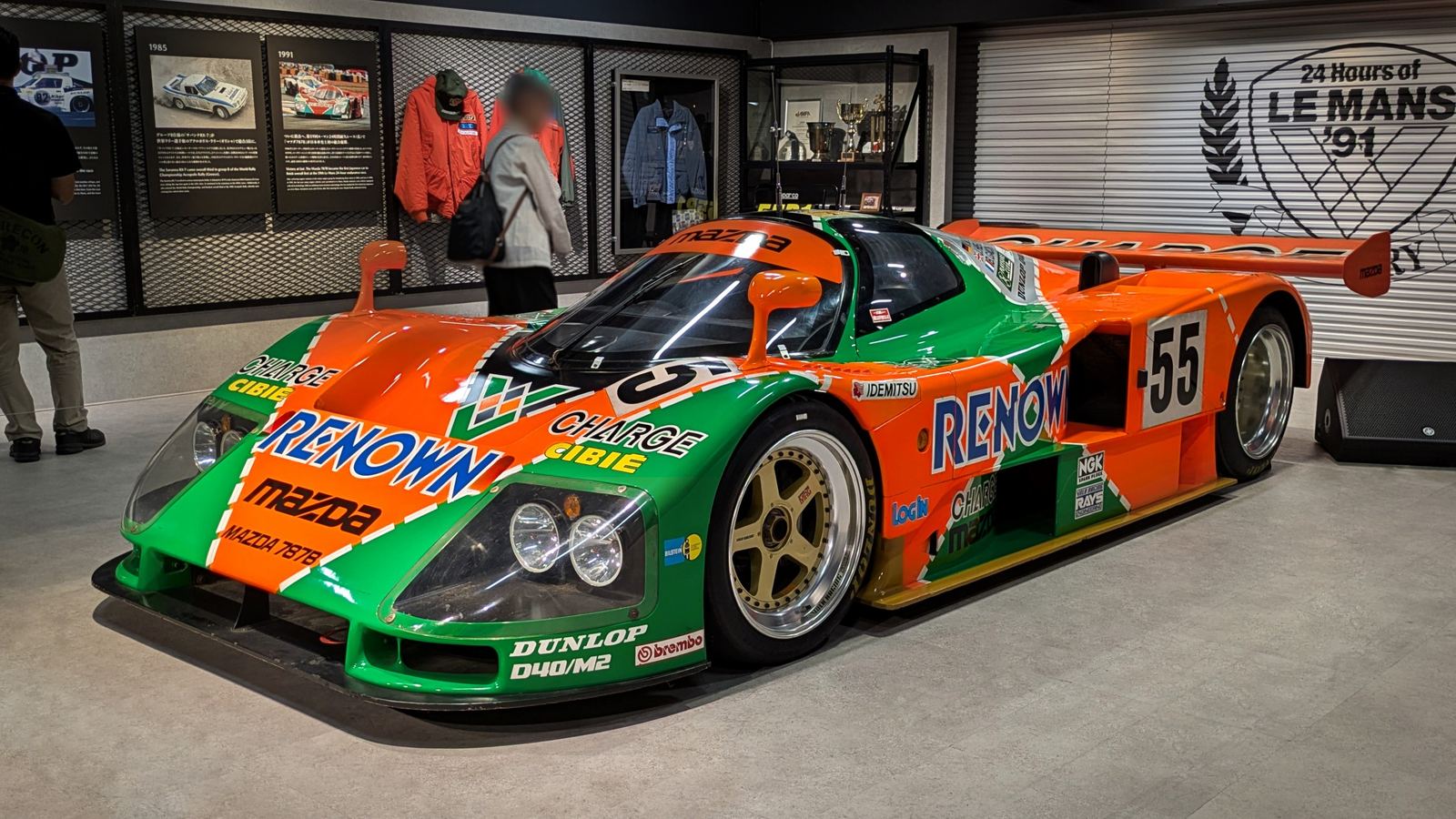
Le Mans has been won by all sorts of engines, and by a great many very serious engineers. It has been won by exactly one rotary. In 1991, the Mazda 787B, car No. 55, took the overall victory at the 24 Hours of Le Mans, and Mazda became the first Japanese manufacturer to win the race.
Thirty-five years later, Mazda says it is still the only rotary-powered car ever to win Le Mans outright.
The last chance
The timing was not an accident of fate so much as a deadline. Because of a change in the race regulations, 1991 was to be the last year a rotary-engined car could compete at Le Mans. Mazda had been chasing the win for 17 years. So the 787B went to France knowing it was sitting the final exam, with no resits.
Four rotors and a lot of noise
Mazda and Mazdaspeed, the outfit that ran Mazda’s racing program, developed the 787B together, with a carbon composite chassis built to the Group C rules. Behind the driver sat the R26B, a four-rotor engine with 654cc per rotor, rated at 700 horsepower. Mazda lists the car’s weight as “over 839 kg” and the gearbox as a Mazda-Porsche five-speed.
Mazda’s own description of the sound is “clear” and “unmistakable.” That is accurate, in the way that describing a jet engine as “audible” is accurate.
24 hours, 362 laps
Volker Weidler, Johnny Herbert and Bertrand Gachot shared the car. It covered 362 laps, roughly 4,923 km, and Mazda says the race went off without a hitch: only routine stops for fuel, tires, driver changes and brake pads. In a race famous for breaking things, the 787B mostly needed new shoes and a drink.
Mazda also says the car set its lap times exactly as planned, picking up the pace only when it needed to pass rivals and pull away. Calm, methodical and quietly devastating, which is not how anyone describes the noise.
Where it lives now
Since 1991, the winning car has mostly been on display at the Mazda Museum in Hiroshima. For the 20th anniversary in 2011, Mazda restored it to driving condition for the first time since its post-race overhaul, and ran it at the Circuit de la Sarthe before that year’s race.
For the 35th anniversary, Mazda scheduled demonstration runs at Le Mans Classic 2026, held July 2 to 5 at the Circuit de la Sarthe, with Yojiro Terada and ACO president Pierre Fillon at the wheel. Fillon said it had “long been a dream” of his to drive it. We understand completely, and we are available.
Why it still matters
Mazda says rotary development continues, and the engine marks its 60th anniversary in 2027. The 787B remains the proof of what an unusual engine can do with 17 years of effort and one last chance, in what Mazda calls the world’s most demanding endurance race.